Mica Powder vs Liquid Pigment for Epoxy: What Is the Difference?
Mica powder and liquid pigment can both be used to colour epoxy resin, but they create different effects. Mica powder is usually chosen for shimmer, pearl effects, metallic movement, colour depth, ghost effects, colour-shift effects, and decorative resin projects. Liquid pigment is often chosen when the goal is a smoother, more solid-looking tint or colour in the epoxy.
Beaver Dust Pigments are mica powder pigments designed for epoxy resin, resin art, woodworking projects, candles, soap making, crafts, and creative applications. All Beaver Dust Pigments are under 60 microns, which helps them mix smoothly and stay suspended in epoxy while it cures.
In This Guide
- What mica powder does in epoxy resin
- What liquid pigment does in epoxy resin
- The main differences between mica powder and liquid pigment
- When to use mica powder for shimmer, metallic, pearl, and specialty effects
- When liquid pigment may be useful for epoxy colour
- Popular Beaver Dust mica powder pigments to explore
- Helpful videos, related guides, and Beaver Dust pigment links
What Is Mica Powder?
Mica powder is a fine shimmer pigment that reflects light inside epoxy resin. It is commonly used when you want colour plus movement, shimmer, pearl effects, metallic effects, ghost effects, colour-shift effects, or a more dimensional look.
In epoxy projects, mica powder is popular for river tables, resin art, ocean pours, coasters, trays, charcuterie boards, woodworking inlays, geode-style effects, candles, soap, crafts, and decorative projects.
Beaver Dust is a mica powder pigment line, so it is best suited for makers who want shimmer, depth, and visual movement instead of a completely flat colour.
Quick Answer: Should You Use Mica Powder or Liquid Pigment in Epoxy?
Use mica powder when you want shimmer, pearl effects, metallic movement, colour-shift effects, ghost effects, or decorative resin movement. Use liquid pigment when you want a smoother, more solid-looking colour or tint without the same mica shimmer.
For epoxy river tables, resin art, ocean effects, coasters, trays, charcuterie boards, and woodworking inlays where the colour is part of the design, Beaver Dust mica powder is usually the better fit.
Watch the Beaver Dust Pigment Collection
This video gives a closer look at the Beaver Dust Pigment collection, including standard mica powders, metallic colours, fluorescent colours, ghost pigments, colour-shift effects, and specialty options.
What Is Liquid Pigment for Epoxy?
Liquid pigment is a liquid colourant used to tint or colour epoxy resin. Depending on the product, it may create a translucent tint, a stronger solid colour, or a more opaque effect. Liquid pigments are often chosen when the goal is a smoother colour without the visible shimmer that mica powder creates.
Liquid pigment can be useful for projects where the colour needs to feel more uniform or where the maker does not want a pearl, metallic, or glitter-like movement in the epoxy.
The final result depends on the liquid pigment, the epoxy system, the amount used, the pour depth, and the background colour, so testing is still important.
Mica Powder vs Liquid Pigment in Epoxy Resin
The main difference between mica powder and liquid pigment is the finished look inside the epoxy.
Mica Powder Creates Shimmer and Movement
Mica powder reflects light, which can create shimmer, pearl effects, metallic movement, colour depth, ghost effects, and colour-shift effects. This makes it a strong choice for decorative epoxy projects where the pigment effect is meant to be visible.
Liquid Pigment Creates a Different Style of Colour
Liquid pigment is usually used when you want the epoxy colour to look smoother or more uniform. Depending on the pigment and amount used, it may create a tint, a stronger colour, or a more opaque look without the same shimmer as mica powder.
Mica Powder Is More Visual and Decorative
For ocean pours, river tables, geode effects, resin art, coasters, trays, charcuterie boards, and decorative fills, mica powder is often the better choice because the shimmer and movement become part of the design.
Both Should Be Tested First
Both mica powder and liquid pigment can look different once mixed into epoxy, poured, cured, and viewed in different lighting. Always test your pigment in the same epoxy system, pour depth, and background colour you plan to use for the final project.
When Should You Use Mica Powder?
Choose mica powder when the pigment effect is part of the finished design and you want the epoxy to have shimmer, movement, or depth.
- River tables: create shimmering epoxy rivers with depth and flowing colour movement.
- Ocean resin art: use blue, green, teal, white, and pearl pigments to create water and wave effects.
- Coasters and trays: create decorative colour movement, metallic swirls, and specialty effects.
- Geode effects: use metallic, white, black, purple, blue, pink, and gold mica powders for layered mineral-style looks.
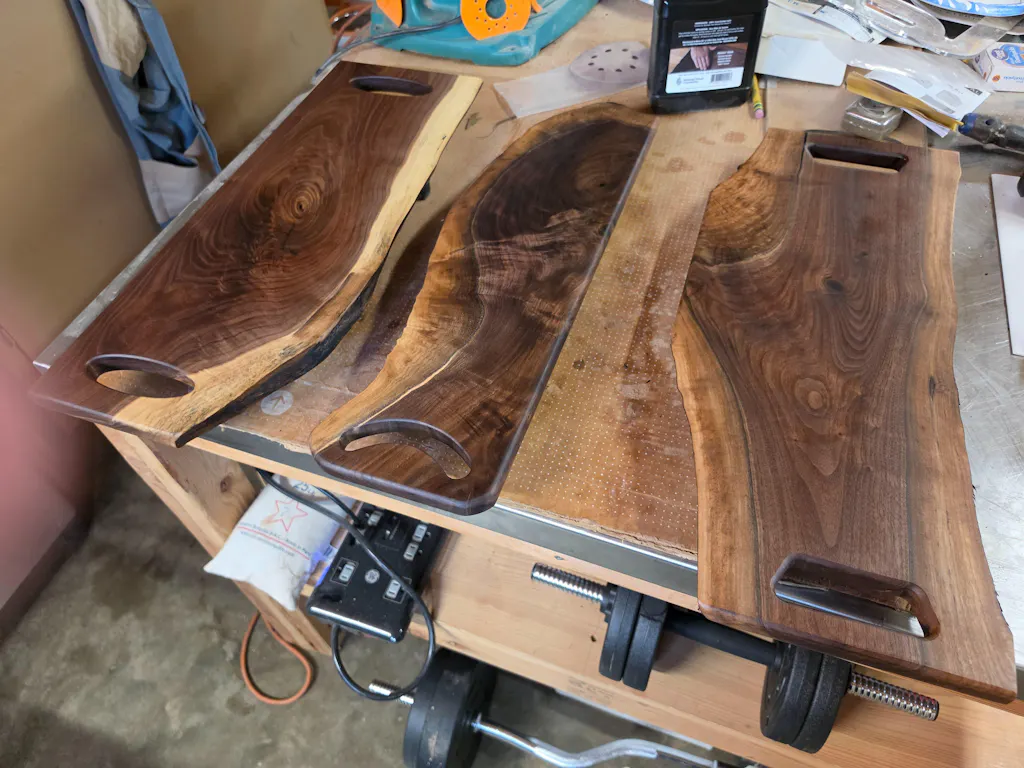
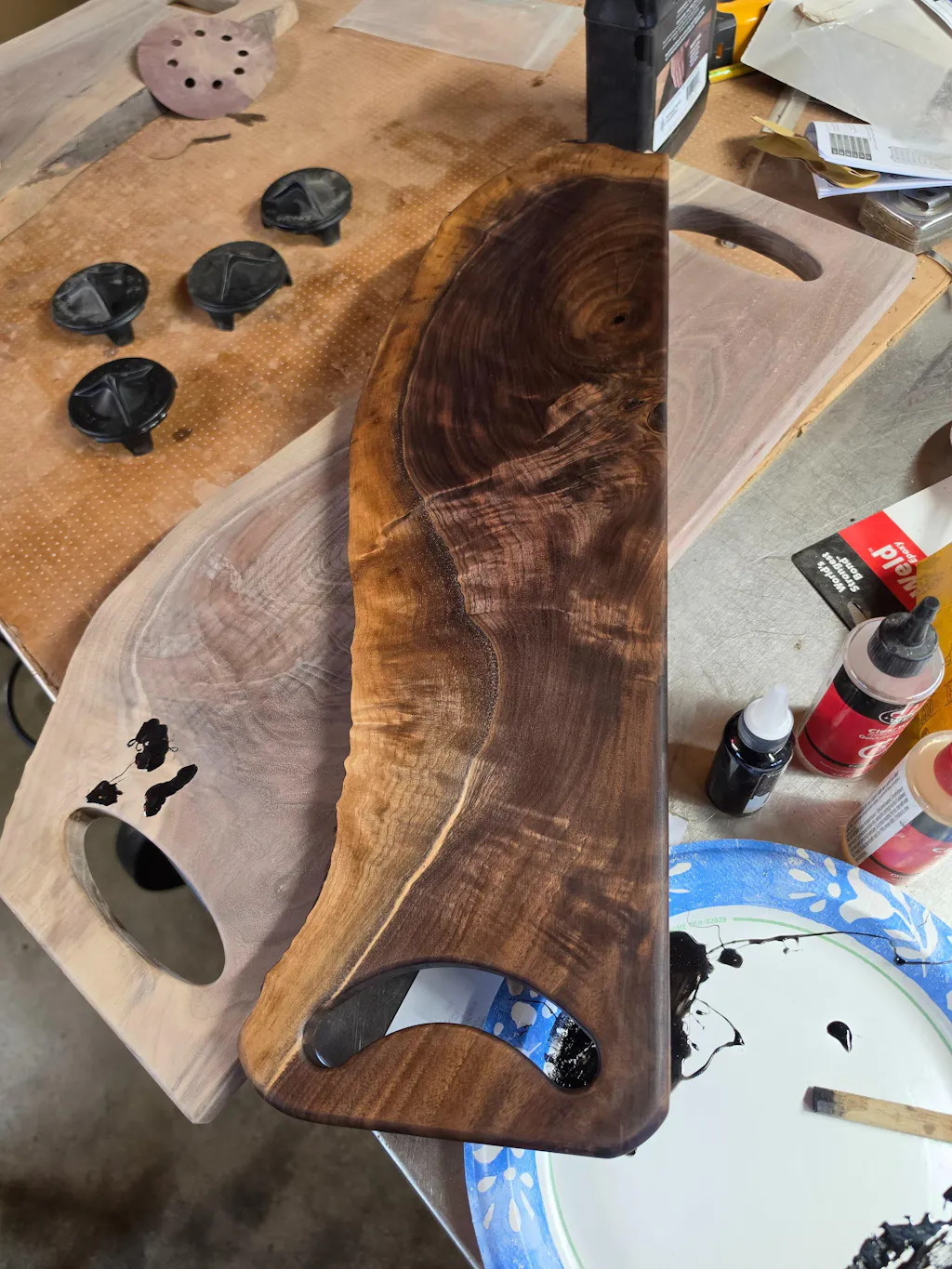
- Woodworking inlays: add shimmer and colour to logos, engraved details, cracks, knots, and decorative fills.
- Ghost and colour-shift effects: create specialty pigments that change depending on light, angle, and background.
- Candles, soap, and crafts: add shimmer, colour, metallic effects, and decorative visuals to handmade projects.
Watch: How to Create an Ocean Wave Epoxy Effect
Ocean-style resin work is a good example of how mica powder can create movement, shimmer, highlights, and visual depth in epoxy resin.
When Might Liquid Pigment Be Better?
Liquid pigment may be a better choice when you want a smoother tint, a more uniform colour, or a less shimmery look. If the project does not need metallic movement, pearl shimmer, or specialty effects, liquid pigment can be useful.
Liquid pigment may also be preferred when the design calls for a simple solid colour instead of a decorative shimmer effect. For example, some makers may prefer liquid pigment for a clean black fill, a simple colour tint, or a more controlled colour block.
That does not make one option better than the other. Mica powder and liquid pigment simply create different looks. The right choice depends on the effect you want.
Can You Use Mica Powder and Liquid Pigment Together?
In some epoxy projects, makers test mica powder and liquid pigment together to create custom colour effects. For example, liquid pigment may be used to tint the epoxy, while mica powder adds shimmer, pearl movement, or metallic highlights.
When combining pigment types, use small amounts and test first. Too much total pigment can affect the colour, clarity, flow, cure behaviour, or final appearance of the epoxy.
Always follow the epoxy manufacturer’s guidance for pigment loading and test your exact combination before using it in a final project.
Why Particle Size Matters With Mica Powder
Particle size can affect how mica powder mixes, how smooth the finished project looks, and whether the pigment stays evenly distributed while epoxy cures. If pigment particles are too large or too heavy, they can settle before the epoxy has hardened.
All Beaver Dust Pigments are under 60 microns. This helps them mix smoothly and stay suspended in epoxy while it cures instead of sinking to the bottom like larger or heavier pigment particles can.
This is especially useful in river tables, deep pours, resin art, coasters, trays, and woodworking projects where even shimmer and colour distribution matter.
Popular Beaver Dust Mica Powder Pigments to Explore
These Beaver Dust options are a helpful starting point if you want to test shimmer, pearl effects, metallic movement, and specialty pigment effects in epoxy resin.
A bright blue-green mica powder for ocean effects, resin art, coasters, trays, and colourful epoxy projects. Shop this pigment → Blue Green
A versatile blue-green mica powder for river tables, water-style pours, resin art, and decorative epoxy. Shop this pigment → White
A useful mica powder for pearl highlights, ocean waves, white shimmer, resin art, candles, soap, and crafts. Shop this pigment → Gun Metal Grey
A dark metallic mica powder for smoky resin, modern epoxy projects, high-contrast effects, and craft accents. Shop this pigment → Blush Red
A warm red mica powder for resin art, candles, soap, crafts, decorative fills, and colourful projects. Shop this pigment → Shop All Beaver Dust
Browse mica powder colours, metallics, fluorescent colours, ghost pigments, colour-shift effects, and variety packs. View full collection →
Common Mistakes When Comparing Mica Powder and Liquid Pigment
- Choosing liquid pigment when you actually want shimmer, movement, or metallic effects.
- Choosing mica powder when you actually want a completely flat, non-shimmer colour.
- Using too much pigment before testing how it affects colour, clarity, flow, and cure behaviour.
- Assuming the colour will look the same in a thin sample and a deeper pour.
- Not testing the pigment in the actual epoxy system you plan to use.
- Judging the pigment only in the container instead of in a cured epoxy sample.
Common Questions About Mica Powder vs Liquid Pigment
Is mica powder better than liquid pigment for epoxy?
Mica powder is better when you want shimmer, pearl effects, metallic movement, colour-shift effects, ghost effects, or decorative resin movement. Liquid pigment may be better when you want a smoother, more solid-looking colour or tint.
Can mica powder and liquid pigment be used together?
They can be tested together in some epoxy projects, but use small amounts and test first. Too much total pigment can affect the colour, clarity, flow, cure behaviour, or final appearance of the epoxy.
Does mica powder make epoxy opaque?
Mica powder can make epoxy more opaque as more pigment is added, but it is usually chosen for shimmer and movement rather than a flat opaque colour. The final opacity depends on the pigment amount, colour, epoxy depth, and background.
Will mica powder sink in epoxy?
Some pigment powders can settle if the particles are too large or heavy. Beaver Dust Pigments are under 60 microns and are designed to stay suspended in epoxy while it cures.
Is Beaver Dust a mica powder or a liquid pigment?
Beaver Dust Pigments are mica powder pigments. They are designed for projects where you want shimmer, colour movement, pearl effects, metallic effects, ghost effects, colour-shift effects, or decorative pigment effects.
Related Beaver Dust Pigment Guides
Continue learning with these related Beaver Dust pigment guides.
Shop Beaver Dust Mica Powder Pigments
Browse Beaver Dust mica powder pigments, metallic colours, fluorescent colours, ghost pigments, colour-shift pigments, star series colours, and variety packs for epoxy resin, resin art, candles, soap making, crafts, coating tests, and creative projects.